
Call us now :08045813260
 Send Inquiry
 Send Inquiry
Agilent 1200 HPLC
Price 650000 INR/ Unit
MOQ : 1 Unit
Agilent 1200 HPLC Specification
- Dimension (L*W*H)
- approx. 60 cm x 50 cm x 40 cm (per module)
- Suitable For
- Laboratory Research, Industrial QC, Academic Research
- Display Type
- Digital LCD/LED with Keypad Controls
- Application
- Chemical Analysis, Pharmaceutical, Biotechnology, Food & Beverage, Environmental Testing
- Properties
- High sensitivity, Reliable, Modular Design, Low Detection Limits
- Material
- Stainless Steel, Polypropylene, Quartz
- Treatment Type
- Chemical, Analytical Processing
- Phase
- Analytical Phase
- Function
- High-precision Liquid Chromatography for Analytical Applications
- Product Type
- High Performance Liquid Chromatography (HPLC) System
- Frequency
- 50/60 Hz
- Accuracy
- 0.1% RSD for retention time
- Height
- 40 cm (single module, approx.)
- Humidity Range
- Max 95% RH, non-condensing
- Shape
- Modular Rectangular Units
- Power
- 110-240 V AC, 50/60 Hz
- Automation Grade
- Fully Automated
- Use
- Separation, identification, and quantification of components in liquid samples
- Storage Capacity
- Sample tray: Holds up to 100 vials (2 mL) per autosampler module
- Weight
- Approx. 25-40 kg (system dependent on configuration)
- Color Code
- White & Grey (Standard Agilent Color Scheme)
- Temperature Range
- Ambient +4C to 60C (Thermostatted autosampler and column compartment)
- Power Source
- Electric
- Voltage
- 110-240 V
- Display
- Digital LCD Display (per module)
- Software Compatibility
- OpenLAB CDS, ChemStation, EZChrom
- Injection Volume
- 0.1100 L (autosampler)
- Pump Type
- Quaternary or Binary Gradient Pump
- Number of Channels
- Up to 4 modular channels
- Mobile Phase Degassing
- Integrated Online Degasser Module
- Noise Level
- < 10 AU
- Detector Types
- Variable Wavelength Detector (VWD), Diode Array Detector (DAD), Fluorescence and Refractive Index Detectors (optional)
- Safety Features
- Leak detection, Power failure recovery, Automated Purge
- Wavelength Range
- 190600 nm for DAD
- Data Output
- USB, LAN, RS232 interfaces
- Maintenance
- Tool-free access for maintenance
- Flow Rate Range
- 0.0110 mL/min (depending on configuration)
- Maximum Pressure
- Up to 600 bar (8700 psi)
Agilent 1200 HPLC Trade Information
- Minimum Order Quantity
- 1 Unit
- Supply Ability
- 1 Unit Per Week
- Delivery Time
- 1 Days
About Agilent 1200 HPLC
Agilent 1200 HPLC is a reliable liquid chromatography analytical laboratory apparatus suitable for conducting Auto sampler diagnostic tests, quaternary pump diagnostic tests, and diode array diagnostic tests. Its pump design ensures smooth flow and compositional accuracy of solvents at different flow ranges. Its variable stroke reduces ripple in the composition of solvent during gradient or isocratic analysis procedure. It's built-in electronic temperature controller helps to maintain the stability of the baseline under constantly changing humidity and temperature conditions. Agilent 1200 HPLC adopts a wide range of detection techniques that includes fluorescence light, UV rays, evaporative light scattering, and so on.
Modular Design for Flexible Analysis
The Agilent 1200 HPLC system features modular rectangular units crafted from stainless steel, polypropylene, and quartz for durability and flexibility. Each module is compact, with dimensions around 60 x 50 x 40 cm, and weighs approximately 2540 kg, allowing you to configure your setup to meet varying analytical requirements in laboratories and industrial settings.
Advanced Detection and Precise Quantification
Choose from multiple detector options, including Variable Wavelength, Diode Array, Fluorescence, or Refractive Index, for highly sensitive measurements. The DAD covers a wavelength range of 190600 nm, delivering low noise levels (< 10 AU) and up to four modular detection channels, ensuring reliable data for demanding analytical tasks.
Fast and Efficient Operation with Automated Features
Enjoy fully automated chromatography with integrated online degassing, leak detection, power failure recovery, and tool-free maintenance. The smart autosampler holds up to 100 vials and injects volumes between 0.1100 L, streamlining workflow and minimizing human error during chemical, pharmaceutical, and environmental analyses.
FAQs of Agilent 1200 HPLC:
Q: How does the Agilent 1200 HPLC accommodate different sample sizes and requirements?
A: The systems autosampler can hold up to 100 vials (2 mL each) per module and allows precise injection volumes from 0.1 to 100 L. This flexibility is ideal for both small- and large-scale analytical experiments, making it suitable for varied laboratory and industrial research needs.Q: What types of detectors can be used with the Agilent 1200 HPLC?
A: You can select from variable wavelength detectors (VWD), diode array detectors (DAD), fluorescence, and refractive index detectors (optional). This range enables high sensitivity detection for different compounds and analytical applications.Q: When should users perform maintenance on the Agilent 1200 HPLC system?
A: Regular system checks based on usage frequency and sample types are recommended. Maintenance is streamlined with tool-free access to internal components, enabling quick cleaning and replacement without specialized equipment. Automated purge and leak detection also support proactive upkeep.Q: Where can the Agilent 1200 HPLC system be implemented?
A: The HPLC is suitable for deployment in laboratories, industrial quality control settings, academic research facilities, and specialized testing environments in pharmaceutical, biotechnology, food & beverage, and environmental sectors.Q: What is the process for data acquisition and analysis with Agilent 1200 HPLC?
A: Data from analyses are output via USB, LAN, or RS232 interfaces and can be managed using compatible software platforms such as OpenLAB CDS, ChemStation, or EZChrom. The digital LCD/LED display and keypad controls further facilitate real-time monitoring and method adjustments.Q: How does the integrated degasser module benefit routine analysis?
A: The integrated online degasser continuously removes dissolved gases from the mobile phase, improving baseline stability and detector performance. This is crucial for achieving high sensitivity and minimizing noise during analytical runs.Q: What are the primary benefits of using the Agilent 1200 HPLC system in analytical laboratories?
A: Key benefits include modular design for flexible configuration, high sensitivity with low detection limits, robust safety features (leak detection, automated purge, power failure recovery), and fully automated operation to ensure reliable and reproducible results in complex chemical analyses.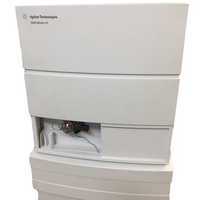
Tell us about your requirement

Price:
Quantity
Select Unit
- 50
- 100
- 200
- 250
- 500
- 1000+
Additional detail
Mobile number
Email

More Products in HPLC System Category
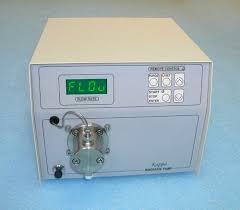
Hplc Column wash Pump
Price 200000 INR / Unit
Minimum Order Quantity : 1 Unit
Suitable For : HPLC System Maintenance
Product Type : HPLC Column Wash Pump
Use : Cleaning and Flushing HPLC Columns
Color Code : Silver / Grey
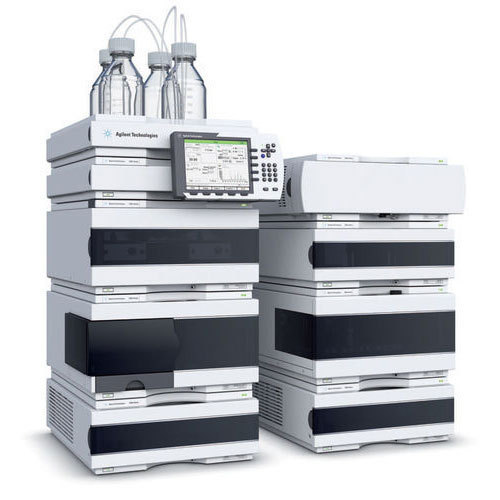
Agilent HPLC System
Price 651000.00 INR / Unit
Minimum Order Quantity : 1 Unit
Suitable For : Scientist
Product Type : Agilent HPLC System
Use : For Lab Use
Color Code : White
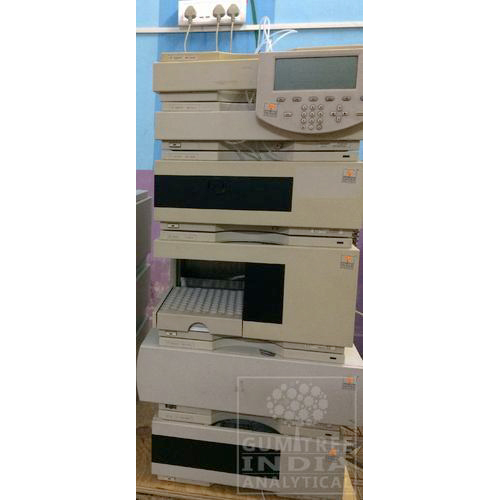
Agilent 1100 Series HPLC System
Price 652000.00 INR / Unit
Minimum Order Quantity : 1 Unit
Suitable For : Scientist
Product Type : Agilent 1100 Series HPLC System
Use : For Lab Use
Color Code : White
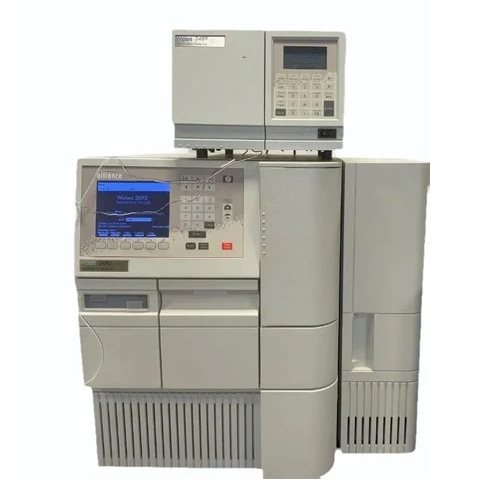
2695 HPLC Systems
Price 800000 INR / Piece
Minimum Order Quantity : 1 Piece
Suitable For : Laboratory
Product Type : 2695 HPLC Systems
Use : Laboratory Use
Color Code : White


 Send Inquiry
Our Products


Plot No. - 1, Sunanda Enclave, Mettakanigudem, Gajularamaram,Hyderabad - 500055, Telangana, India

Mr Sham Kumar Chowdary
(Proprietor)
Mobile :08045813260
 Send Inquiry
 Send SMS
Developed and Managed by Infocom Network Private Limited.
 English
 Spanish
 French
 German
 Italian
 Chinese (Simplified)
 Japanese
 Korean
 Arabic
 Portuguese